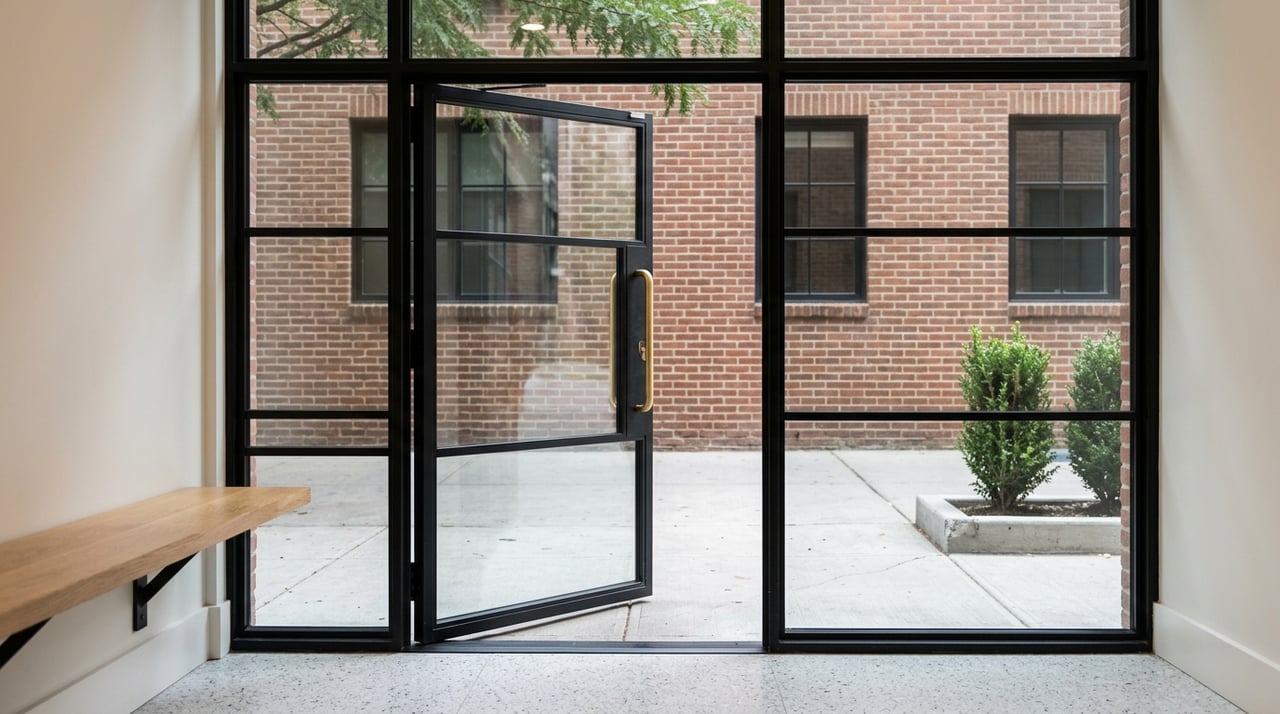
If your ideal workday starts with a short walk instead of a long commute, Fulton Market deserves a closer look. This part of Chicago has evolved into a live-work-play neighborhood where office towers, loft buildings, restaurants, and transit all sit within a compact footprint. If you are weighing convenience, lifestyle, and long-term value, living near the office here can offer a very specific kind of city life. Let’s dive in.
Why Fulton Market appeals to office-adjacent buyers
Fulton Market stands out because it blends historic industrial character with newer residential growth. The area’s preserved warehouse streetscape is not accidental. The Fulton-Randolph Market District was designated as a landmark district covering 74 acres and 142 properties, including 86 contributing buildings, which helps explain the neighborhood’s brick, steel, and loft-like feel even as new development continues.
That mix can be especially appealing if you want a home that feels design-forward but still grounded in Chicago history. You are not choosing between old and new as much as choosing a neighborhood where both coexist. In practical terms, that means exposed brick, concrete, and converted loft aesthetics can sit just blocks from newer amenity-rich towers.
Residential growth changed the neighborhood
One of the biggest reasons Fulton Market has become more realistic for full-time residential living is policy. The 2021 Fulton Market Innovation District Plan Update allowed residential uses north of Lake Street and set a 30 percent affordability goal for new residential projects in that area. That opened the door for more apartments and taller residential buildings in a district that had long been more office and commercial focused.
For you as a buyer or renter, that matters because it expanded the housing conversation. Fulton Market is no longer just a place where people work and go out at night. It has become a place where more people can actually build day-to-day routines close to the office.
What housing looks like in Fulton Market
The housing stock in Fulton Market is broadening, but it still leans heavily into the neighborhood’s urban identity. You will find loft-style apartments and condos, modern mixed-use buildings, and newer projects that prioritize amenities and flexible layouts.
At 945 W Fulton Market, advertised units include two- and three-bedroom loft-style apartments with concrete flooring, exposed brick, and work-from-home layouts. Fulbrix highlights 30,000 square feet of amenity space across multiple indoor and outdoor levels. Another project, 1215 W Fulton Market, is planned as a 34-story mixed-use building with 433 dwelling units, retail at street level, underground parking, and bike parking.
Current condo inventory also reflects that loft-oriented identity. Listings in the area include homes in buildings such as The Fulton Market Lofts, along with penthouse loft options. If you value architecture, natural texture, and modern building services, Fulton Market offers a combination that can be hard to replicate in other parts of the city.
The real advantage is daily convenience
The strongest case for living near the office in Fulton Market is simple: your daily routine can become much easier. A shorter commute can free up time in the morning, make it easier to pop home between meetings, and give you more flexibility after work. That convenience is a major lifestyle upgrade if you spend long hours downtown or in the West Loop office corridor.
This neighborhood is best understood as a place built around activity density. You are close to offices, dining, bars, coffee spots, and transit, often within a short walk. For many professionals, that means less planning, less commuting friction, and more choice in how to spend your time.
Fulton Market lifestyle after work
Lifestyle is where Fulton Market really earns its reputation. Choose Chicago describes the broader West Loop as a foodie mecca and notes that Fulton Market has a cool industrial vibe, with trendy restaurants and bars set inside former warehouse spaces. That gives the neighborhood a distinct rhythm that feels polished, social, and energetic.
If you enjoy the idea of stepping out after work without needing a car or rideshare, Fulton Market makes that easy. Dinner plans, casual drinks, and spontaneous meetups can all fit naturally into your week. The neighborhood is compact enough to support that kind of flexibility, which is a major reason many buyers and renters are drawn to it.
The dining scene is also still evolving. New openings highlighted in Choose Chicago’s 2026 roundup, including Labriola Italian Specialties and The Bougie Foodie, show that Fulton Market is not standing still. For residents, that means the neighborhood continues to feel current rather than settled.
Green space helps balance the density
Fulton Market is not usually defined as a quiet residential retreat, and it helps to be honest about that. Its appeal is convenience, design, and urban energy. Still, nearby park access gives you room to step away from the pace when you need it.
Mary Bartelme Park offers 2.71 acres with a fountain plaza, play area, sunken dog park, open lawn, and seating areas. Skinner Park is larger at 7.01 acres and provides another nearby open-space option. If you want walkability without giving up every outdoor reset, those parks help balance the neighborhood’s density.
Transit makes car-light living realistic
If your goal is to live near the office without relying heavily on a car, Fulton Market has a strong case. Morgan is a key local CTA stop and is an accessible Green and Pink Line station at 958 W Lake Street. Ashland is another nearby accessible Green and Pink transfer station with CTA Bus 9 and X9 connections.
The transit picture improved further when the new Damen Green Line station opened in summer 2024. That addition helped fill a gap on the near West Side and expanded options for moving through this part of the city. For many residents, this makes it easier to combine walking with CTA use depending on weather, work schedules, and destination.
Regional commuting is also a plus. Metra’s UP-N, UP-NW, and UP-W lines use Ogilvie Transportation Center, and CTA notes that Ogilvie is three blocks west of Washington/Wells on Madison. If you split your time between city living and suburban or regional travel, that access can be especially useful.
Parking still exists, but you may need it less
Even though many newer buildings include at least some parking, Fulton Market supports a car-light pattern better than many neighborhoods. If your office, gym, favorite restaurants, and train options are all nearby, you may find yourself driving far less often. For some buyers, that changes what matters most in a home search.
Instead of prioritizing a long commute offset by extra square footage, you may focus on layout, natural light, building amenities, and ease of access. That shift is one reason Fulton Market often appeals to people who see real estate as both a lifestyle decision and a practical one.
How Fulton Market compares nearby
If you are deciding between Fulton Market, River North, and the broader West Loop, the differences are useful to understand. Choose Chicago frames River North as ultra-stylish and highly urban with a major nightlife scene. It describes West Loop as a foodie mecca, while noting Fulton Market’s industrial vibe and concentration of trendy restaurants and bars in former warehouse spaces.
In everyday terms, Fulton Market tends to sit between the broader restaurant identity of West Loop and the later-night energy often associated with River North. That can make it feel especially well suited for buyers who want polish and activity, but not necessarily a club-centered environment. It is a distinct urban experience, and that nuance matters when you are choosing where to live.
Pricing reflects demand and momentum
Current pricing snapshots show Fulton Market commanding a premium. In March 2026, Redfin reported a median sale price of $548K in Fulton Market, compared with $499K in West Loop and $427K in River North. While median price is only one measure, it does suggest that Fulton Market is attracting strong demand.
That premium likely reflects several factors named in the research: newer supply, close office adjacency, and the neighborhood’s continued momentum. If you are considering buying here, it is worth thinking about both your lifestyle goals and your budget comfort level. A higher price point may be justified for you if proximity and convenience are central to how you want to live.
Who is Fulton Market best for?
Fulton Market is often a strong fit if you want your home and work life to connect more seamlessly. It can make sense for professionals who want to walk to the office, enjoy a highly social dining scene, and live in a building with modern amenities or loft-style character. It can also work well if transit flexibility matters and you like being in the middle of visible neighborhood growth.
It may be less ideal if your top priority is a quieter, more purely residential setting. This is a neighborhood built around energy and convenience first. That is not a drawback if that is what you want, but it is important to match the neighborhood to your real daily habits.
What to weigh before you move
Before choosing Fulton Market, think about what “living near the office” really means for you. Consider questions like:
- How often do you go into the office each week?
- Would a shorter commute meaningfully improve your quality of life?
- Do you want loft character, newer amenities, or a mix of both?
- How important are transit access and walkability?
- Are you comfortable paying a premium for convenience and neighborhood momentum?
These are the kinds of questions that help narrow not just the right neighborhood, but the right building and block. In Fulton Market, small location differences can shape how much you feel connected to transit, nightlife, parks, and office corridors.
A smart move for the right lifestyle
Living near the office in Fulton Market is about more than shaving time off your commute. It is about creating a day-to-day life with less friction and more access to the things you actually use. When that includes strong transit, evolving housing options, standout dining, and a distinctive industrial-modern streetscape, the neighborhood becomes compelling for a very specific buyer.
If you are thinking about buying, selling, renting, or investing in Fulton Market or another near-downtown Chicago neighborhood, a tailored strategy matters. Let’s connect for a private consultation. Whether you’re buying, selling, or investing, Chloe Ifergan can help you build a custom plan and move forward with clarity.
FAQs
Is Fulton Market a good neighborhood for walking to work?
- Yes. Fulton Market is especially appealing for people who want office adjacency, short commutes, and easy access to dining, transit, and daily conveniences within a compact area.
What types of homes are available in Fulton Market?
- Fulton Market includes loft-style apartments, condo inventory with industrial character, and newer mixed-use residential buildings with modern amenities, parking, and bike storage in some projects.
Does Fulton Market have good CTA and Metra access?
- Yes. The area is served by the accessible Morgan and Ashland Green and Pink Line stations, the newer Damen Green Line station, and convenient access to Ogilvie Transportation Center for select Metra lines.
How does Fulton Market compare with River North?
- Fulton Market generally offers a warehouse-to-modern aesthetic with a strong restaurant scene and close office access, while River North is described as more nightlife-driven and ultra-urban.
Are there parks near Fulton Market residences?
- Yes. Nearby options include Mary Bartelme Park and Skinner Park, which provide open space, seating areas, lawn space, and other outdoor amenities close to the neighborhood.
Are home prices in Fulton Market higher than nearby neighborhoods?
- Based on a March 2026 pricing snapshot from Redfin, Fulton Market had a higher median sale price than both West Loop and River North, suggesting a current premium tied to demand and location.